introduction: this article summarizes the best practices of german computer room technology in cabinet layout and cable management, focusing on availability, heat dissipation, power supply safety and maintainability. the goal is to provide reusable guidance for data center design, deployment, and operation and maintenance, and improve stability and efficiency.
german computer room technology focuses on modularization, standardization and maintainability, and emphasizes forward-looking design to reduce operational risks. through strict specifications, we achieve high availability, easy expansion, and manageable cabinet and cable systems, taking into account energy efficiency and reliability.
cabinet layout should follow the principles of hot zone separation, channel standardization and load balancing. reasonably plan the cabinet arrangement, channel width and equipment density to facilitate cooling, inspection and emergency response, and reduce the risk of maintenance interference and thermal interference.
the height and depth of the cabinet should be selected based on the size of the equipment and ventilation requirements to avoid excessive stacking. control the power density of each cabinet, reduce single-point overload through zoning and power allocation, and facilitate later expansion and heat dissipation management.
cable management aims to be clear, traceable and efficient, giving priority to hierarchical cabling, fixed cabling troughs and reserved margins. a good cabling strategy reduces troubleshooting time, increases the speed of change, and reduces the risk of human damage.
cable trays and vertical channels should be zoned by signal type and density to ensure bend radius, load carrying capacity and room for future expansion. proper fixation and separation can reduce electromagnetic interference and improve safety and convenience during maintenance.
standardized identification and complete documentation are the basis for efficient cable management. the use of unified coding, electronic topology and change records ensures that operation and maintenance personnel can quickly locate, roll back changes and conduct reliability analysis and auditing.
german computer rooms attach great importance to the separation of cold aisles/hot aisles, guide airflow through cabinet doors, baffles and floors, and optimize the layout by combining cooling capacity and airflow modeling. the goal is to reduce cooling energy consumption and ensure a balanced temperature across the equipment.
the cabinet adopts closed management, closed front and rear doors and guide plates to reduce bypass airflow, rationally arranges fans and ventilation holes, and combines temperature sensors to achieve refined control to improve cooling efficiency and equipment life.
power supplies are designed with redundancy, load balancing and security at their core. use partitioned power supply, clear circuit identification, and regular ground resistance testing to ensure rapid switching in the event of a fault and protect the safety of equipment and personnel.
modular cabinets and reserved maintenance space can significantly improve operation and maintenance efficiency. easy-to-remove panels, replaceable power supplies, and standardized interfaces facilitate on-site replacement and upgrades, reduce downtime windows and support rapid fault isolation.
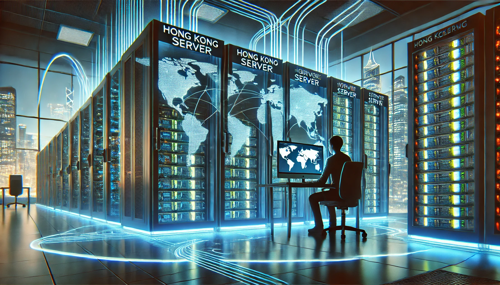
establish a real-time monitoring and alarm system covering key indicators such as temperature, humidity, current and access control. combined with sla, regular inspections and change approval processes, a closed-loop improvement is formed to ensure long-term stability and reliability of cabinet and cable management.
summary: the core of adopting german computer room technology lies in standardization, modularization and traceability management. it is recommended to include cold/hot aisle, cable routing and power redundancy design from the planning stage, establish a documented process and monitoring system, and continuously optimize to reduce risks and operating costs.
- Latest articles
- How To Achieve Stable Operation Even If There Is A Cheap Thailand Vps Through Configuration Tailoring
- Why Do E-commerce Websites Prefer High-defense Servers In California, USA, To Protect Against Traffic Impact?
- Technical Guide: How Can Newbies Quickly Test And Go Online With Singapore Cn2 Direct Connection?
- Recommended Vps Cambodia Images And Automated Deployment Templates For Developers
- Zelda Scheduled Hong Kong Server And Local Server Delay Comparison And Selection Suggestions
- Japanese Cloud Server Download And Migration Practical Guide In Offline Installation Scenario
- Comparing The Specific Requirements For German Independent Servers On The Capabilities Of Operation And Maintenance Teams From Hosting To Self-management
- Network Diagnosis Method For Vietnam Server Cf Game Commentary In A Cross-border Battle Scenario
- Comparison Of Performance Of Japanese Cn2 Lines In Operator Interconnection In Different Regions
- Are There Cloud Servers In Taiwan? Latest Market Supply And Purchase Channel Inventory
- Popular tags
-

German Server Ip Recommendation And Usage Experience Sharing For Toilet Games
this article shares the recommendations and usage experience of toilet users when choosing german server ip to help users better understand how to choose a suitable server. -

Summary Of Common Problems And Solutions For German Server Hosting
this article summarizes common problems and their solutions during the server hosting process in germany to help you easily deal with various challenges. -

The History Of The Telegraph Machine Room And The Evolution Of Wiring In The German Machine Room
this article explores the history of the telegraph machine room and the evolution of german machine room wiring, and analyzes its impact on modern communication technology.